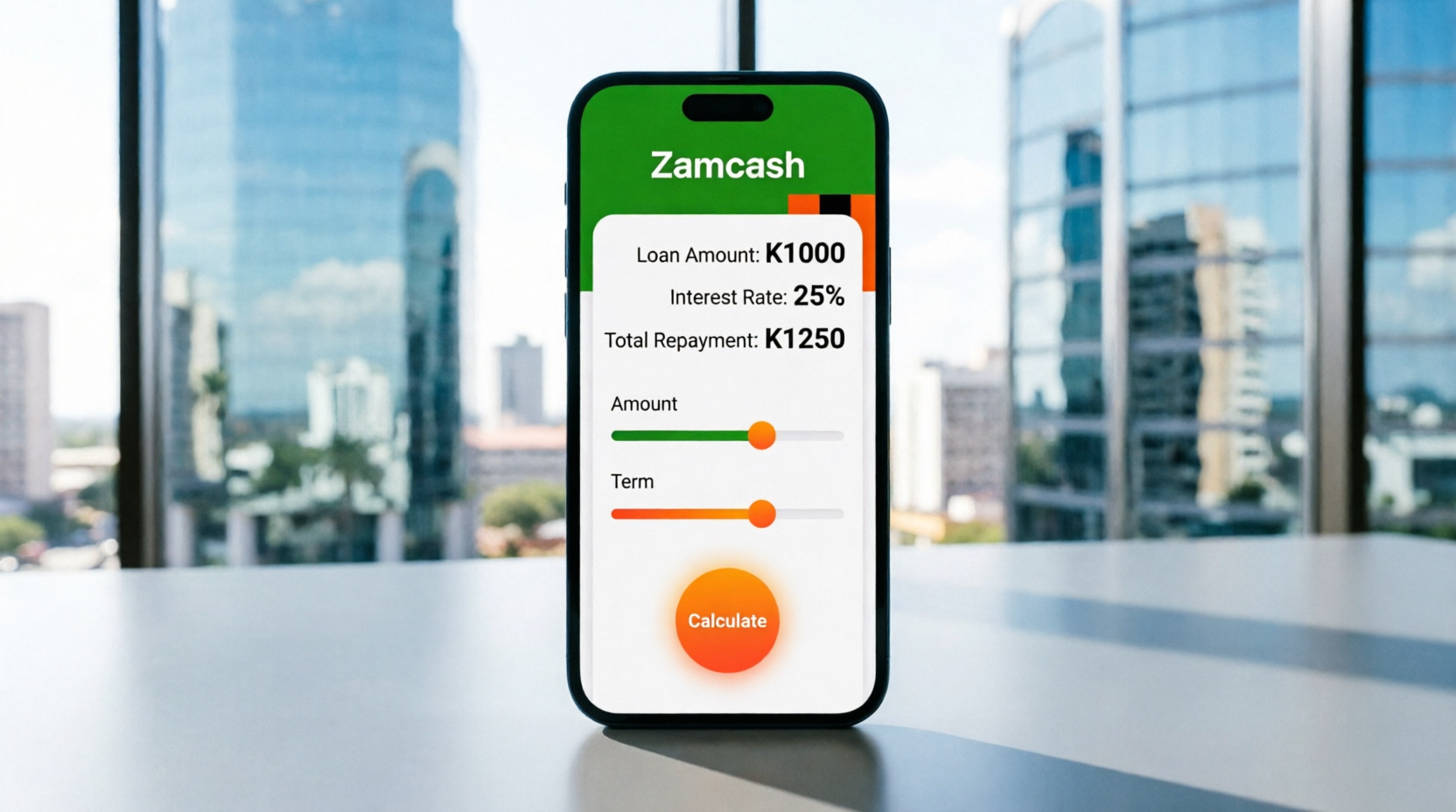
Zamcash calculator
The Zamcash Loan Calculator helps you determine your monthly loan payments, calculate total interest costs, and plan your loan repayment schedule. By entering your loan amount, interest rate, and loan term, you can understand the true cost of borrowing and make informed financial decisions. This tool is useful for personal loans, business loans, mortgages, auto loans, and any other installment-based lending. Always compare offers from multiple lenders and consult with a financial advisor before borrowing.
Zamcash Loan Calculator
Calculate your monthly loan payment based on principal, interest rate, and loan term.
| Loan Amount (ZMW) | Annual Interest Rate (%) | Loan Term (months) | Loan Type |
View your complete loan amortization schedule showing payment breakdown over time.
| Loan Amount (ZMW) | Annual Interest Rate (%) | Loan Term (months) | Show First |
| Month | Payment (ZMW) | Principal (ZMW) | Interest (ZMW) | Remaining Balance (ZMW) |
|---|
Compare different loan terms and interest rates to find the best option for you.
| Loan Amount (ZMW) | Interest Rate Range (%) |
Understanding Loans and Borrowing
A loan is a financial transaction where a lender provides money to a borrower with the expectation that it will be repaid over a specified period, typically with interest. The interest rate represents the cost of borrowing and is usually expressed as an annual percentage rate (APR). Understanding loan terms, interest rates, and your monthly obligations is crucial for making sound financial decisions. For additional financial planning, explore our Calorie Calculator, BMI Calculator, and Nutrition Calculator to support your overall wellbeing during financial planning.
Loan Payment Calculation
The monthly loan payment is calculated using an amortization formula that accounts for the principal (loan amount), interest rate, and loan term. The payment remains constant throughout the loan period, but the portion allocated to principal and interest changes each month. Early in the loan term, most of your payment goes toward interest; toward the end, more goes toward principal.
Types of Loans
| Loan Type | Purpose | Typical Term | Interest Rate Range |
|---|---|---|---|
| Personal Loan | General personal expenses, debt consolidation | 12-60 months | 12-24% |
| Business Loan | Business expansion, equipment, working capital | 12-120 months | 8-20% |
| Mortgage | Home/property purchase | 120-360 months | 5-12% |
| Auto Loan | Vehicle purchase | 24-84 months | 6-18% |
Key Loan Terms and Concepts
Principal
The original amount of money borrowed. In the example above, the principal is 50,000 ZMW. The principal balance decreases over time as you make payments.
Interest Rate
The percentage charged by the lender for use of their money. This is typically expressed as an Annual Percentage Rate (APR). A 18% APR means you’ll pay 18% of the principal annually. Higher interest rates significantly increase the total cost of borrowing.
Loan Term
The length of time you have to repay the loan. Shorter terms result in higher monthly payments but lower total interest paid. Longer terms result in lower monthly payments but higher total interest paid.
Monthly Payment
The fixed amount you pay each month toward your loan. This payment includes both principal and interest portions, which change each month.
Amortization
The process of paying off a loan over time through regular payments. An amortization schedule shows exactly how much of each payment goes toward principal and interest.
Benefits of Lower Interest Rates
- Reduces monthly payment obligations
- Decreases total interest paid over the life of the loan
- Allows you to pay off the loan faster while maintaining same payment
- Frees up more cash for other expenses and savings
- Reduces financial stress and improves creditworthiness
Factors Affecting Loan Approval and Interest Rates
| Factor | Impact on Interest Rate | Explanation |
|---|---|---|
| Credit Score | Higher score = Lower rate | Good credit history demonstrates reliable payment behavior |
| Income and Employment | Stable income = Lower rate | Consistent income shows ability to repay the loan |
| Debt-to-Income Ratio | Lower ratio = Lower rate | Less existing debt means better capacity to handle new loan |
| Collateral | Secured loan = Lower rate | Offering collateral reduces lender’s risk |
| Loan Term | Shorter term = Lower rate | Less time means less risk for the lender |
How to Get the Best Loan Terms
1. Improve Your Credit Score
A higher credit score typically results in lower interest rates. Pay bills on time, reduce existing debt, and check your credit report for errors.
2. Compare Multiple Lenders
Interest rates vary between lenders. Compare offers from banks, credit unions, and online lenders to find the best terms for your situation.
3. Increase Your Down Payment
A larger down payment reduces the loan amount and your risk profile, potentially lowering your interest rate.
4. Choose the Right Loan Term
While longer terms mean lower payments, shorter terms cost less in total interest. Find the balance that works for your budget.
5. Provide Collateral if Possible
Secured loans (backed by collateral) typically have lower interest rates than unsecured loans because the lender has less risk.
Warning Signs of Predatory Lending
- Extremely high interest rates (above 50% APR) without justification
- Pressure to borrow more than you need
- Unclear or hidden fees and charges
- Loans that require giving up essential assets as collateral
- Loans based on house equity with excessively high rates
- Promises of guaranteed approval regardless of credit
- Pressure to sign documents quickly without reviewing
- Payment-to-income ratios that seem unrealistic
Tips for Responsible Borrowing
- Borrow only what you need — The more you borrow, the more you’ll pay in interest
- Understand all terms — Read and comprehend the entire loan agreement before signing
- Make payments on time — Late payments damage your credit and may trigger higher interest rates
- Avoid taking on too much debt — Don’t let total monthly payments exceed 30-40% of your gross income
- Consider early repayment — If possible, pay off the loan early to save on interest
- Keep an emergency fund — Set aside savings for unexpected expenses so you can meet loan obligations
- Shop around — Multiple inquiries within 14-45 days typically count as one credit inquiry
- Avoid payday loans — These often carry extremely high interest rates and unfavorable terms
Frequently Asked Questions
What’s the difference between APR and interest rate?
The interest rate is just the cost of borrowing the principal loan amount. APR (Annual Percentage Rate) includes the interest rate plus other costs and fees involved in procuring the loan. APR gives a more complete picture of the true cost of borrowing.
Can I pay off my loan early?
Most loans allow early repayment without penalty. Paying off early saves you money on interest. However, some loans may have prepayment penalties, so check your loan agreement. Early payment will significantly reduce your total interest paid.
What affects my monthly payment?
Your monthly payment is determined by three factors: the loan amount (principal), the interest rate, and the loan term. Increasing any of the first two increases your payment; increasing the term decreases your payment but increases total interest paid.
Should I choose a shorter or longer loan term?
Shorter terms have higher monthly payments but lower total interest costs. Longer terms have lower monthly payments but higher total interest costs. Choose based on your budget and financial goals. If you can afford higher payments, shorter terms save money overall.
Why did I get offered a high interest rate?
Higher interest rates reflect greater risk to the lender. Factors include lower credit scores, unstable income, higher debt-to-income ratios, or current economic conditions. Working to improve these factors can help you qualify for better rates in the future.
What is an amortization schedule?
An amortization schedule breaks down each monthly payment into principal and interest portions. Early payments are mostly interest; later payments are mostly principal. This schedule helps you understand exactly where your money is going each month.
Disclaimer: This Zamcash Loan Calculator provides estimates based on standard loan amortization calculations. Actual loan payments, terms, and interest rates may vary based on lender policies, credit assessment, market conditions, and individual circumstances. These calculations should not replace professional financial advice. Consult with a financial advisor or lender for personalized loan guidance. Always read and understand your complete loan agreement before borrowing.