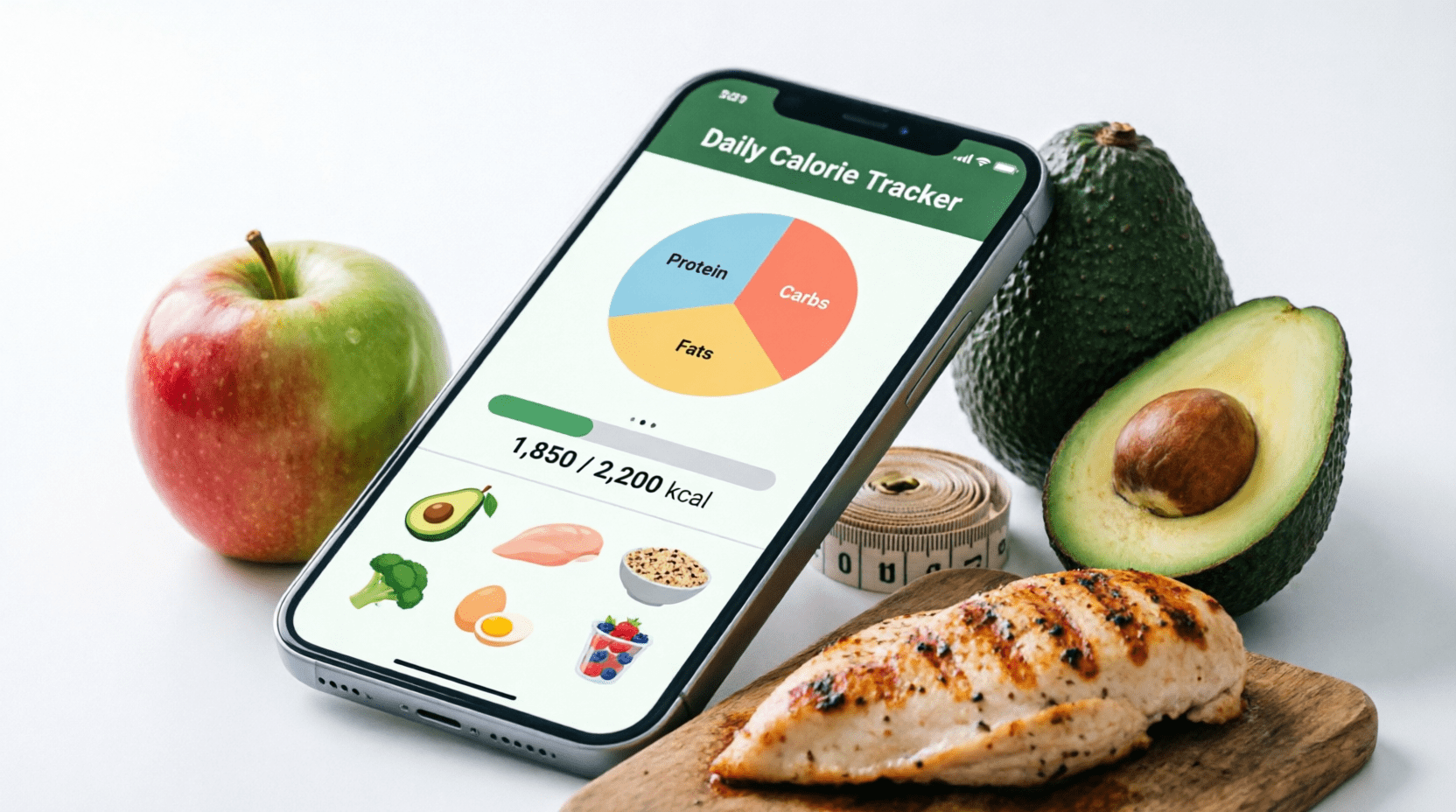
Calorie Calculator
The Calorie Calculator helps you determine your daily caloric needs based on your personal information and activity level. By calculating your Basal Metabolic Rate (BMR) and Total Daily Energy Expenditure (TDEE), you can understand how many calories you need to maintain, lose, or gain weight. This tool is useful for diet planning, fitness goals, and nutritional management. Always consult with a healthcare provider or registered dietitian for personalized nutrition advice.
Calorie Calculator
Calculate your daily calorie requirements based on the Harris-Benedict formula.
| Gender | Age (years) | Height (cm) | Weight (kg) |
| Activity Level | |||
Calculate daily calorie intake for your weight loss, maintenance, or gain goals.
| Your TDEE (kcal) | Goal | Rate (lbs/week) |
Understanding Caloric Needs
Calories are units of energy that your body uses to function, move, and maintain itself. Your daily caloric needs depend on several factors: your basal metabolic rate (BMR), which is the energy your body uses at rest; your activity level; your age; your gender; your height; and your weight. Understanding your caloric needs is fundamental to managing your weight, whether you want to lose weight, maintain your current weight, or gain weight and muscle.
What Is BMR (Basal Metabolic Rate)?
Your Basal Metabolic Rate (BMR) is the number of calories your body burns at rest to maintain basic functions like breathing, circulation, cell production, and nutrient processing. BMR accounts for about 60-75% of your total daily energy expenditure in sedentary individuals. It varies based on age (decreases with age), gender (typically higher in men due to greater muscle mass), height, weight, and genetics. The Harris-Benedict equation is one of the most widely used formulas to estimate BMR.
What Is TDEE (Total Daily Energy Expenditure)?
Your Total Daily Energy Expenditure (TDEE) is the total number of calories your body burns in a day, including your BMR plus the calories burned through physical activity and digestion. TDEE is calculated by multiplying your BMR by an activity factor that ranges from 1.2 (sedentary) to 1.9 (extremely active). TDEE is the number you need to know to lose, maintain, or gain weight effectively.
Weight Loss and Caloric Deficit
To lose weight, you need to consume fewer calories than your TDEE—this is called a caloric deficit. One pound of body fat is roughly equivalent to 3,500 calories, so a deficit of 500 calories per day leads to approximately 1 pound of weight loss per week. A moderate deficit of 500 calories is generally considered safe and sustainable, while a more aggressive deficit of 1,000 calories leads to 2 pounds per week. Extreme deficits can be unhealthy and unsustainable.
Your TDEE: 2,500 calories/day
Goal: Lose 1 pound per week
Required deficit: 500 calories/day
Daily calorie intake: 2,500 – 500 = 2,000 calories
Expected weight loss: 1 pound/week or 4 pounds/month
Expected Results After 12 Weeks:
12 weeks × 1 pound/week = 12 pounds (5.4 kg)
Weight Maintenance
To maintain your current weight, consume calories equal to your TDEE. This means the energy you take in equals the energy you burn, resulting in no net weight change. Many people find weight maintenance easier than weight loss because they can eat more food and feel more satisfied. However, metabolic changes over time may require adjusting calorie intake.
Weight Gain and Muscle Building
To gain weight, you need to consume more calories than your TDEE—this is called a caloric surplus. A surplus of 300-500 calories per day typically leads to about 0.5-1 pound of weight gain per week. To maximize muscle gain rather than fat gain when in a surplus, combine the increased calories with strength training and adequate protein intake (0.7-1 gram per pound of body weight).
Factors Affecting Caloric Needs
| Factor | Impact on Calories | Explanation |
|---|---|---|
| Age | Decreases with age | Metabolism slows ~2% per decade after age 30 due to muscle loss (sarcopenia) |
| Gender | Males higher than females | Men typically have more muscle mass, which burns more calories at rest |
| Muscle Mass | More muscle = more calories | Muscle tissue is metabolically active; 1 lb of muscle burns ~6 calories/day |
| Body Composition | Higher if lean | Two people of same weight can have different caloric needs based on muscle vs fat |
| Activity Level | Higher with exercise | More physical activity = higher TDEE; strength training builds muscle |
| Metabolism | Varies genetically | Some people naturally have faster/slower metabolisms due to genetics |
Macronutrients and Calories
While total calories matter for weight loss or gain, the source of those calories affects body composition and health. Macronutrients are the three main nutrients that provide energy: carbohydrates and protein (4 calories per gram), and fat (9 calories per gram). A balanced diet typically includes 45-65% carbohydrates, 10-35% protein, and 20-35% fats. Higher protein intake (1.6-2.2 grams per kg) is beneficial during weight loss or muscle gain to preserve lean muscle.
Frequently Asked Questions
How accurate is this calorie calculator?
The Harris-Benedict formula is reasonably accurate for estimating BMR, typically within 10-15% for most people. However, individual variation exists due to genetics, metabolism, and body composition. For a more precise measurement, indirect calorimetry or DEXA scans can be used, but they’re expensive and not necessary for general fitness goals.
Should I eat the same calories every day?
Not necessarily. Some people practice “flexible dieting” where calories are adjusted based on activity level (eating more on workout days). Others eat the same amount daily. Both approaches work; choose whichever is easiest to maintain consistently.
What if I don’t see weight loss eating below my TDEE?
Several factors could be involved: your calculated TDEE may be higher or lower than actual (try adjusting for a week), you may be underestimating food intake, you may be gaining muscle while losing fat (scale weight stays same), or medical conditions may affect metabolism. If stuck for 4+ weeks, consult a healthcare provider.
Can I lose weight without exercising?
Yes, weight loss is primarily about caloric deficit—you can lose weight through diet alone. However, exercise helps create a caloric deficit, preserves muscle during weight loss, improves health, and boosts metabolism slightly. For best results, combine a caloric deficit with regular exercise and adequate protein.
How much protein do I need?
The RDA (Recommended Dietary Allowance) is 0.8 grams per kg of body weight. However, for weight loss or muscle gain, 1.6-2.2 grams per kg is more beneficial. This helps preserve muscle mass during a caloric deficit and supports muscle growth with a surplus.
How quickly should I lose weight?
A safe rate is 1-2 pounds per week (0.5-1 kg), which corresponds to a deficit of 500-1,000 calories daily. Faster weight loss often results in muscle loss and is harder to sustain. Aim for gradual, sustainable change rather than rapid results.
Disclaimer: This calorie calculator provides estimates based on the Harris-Benedict formula. Individual caloric needs vary significantly based on genetics, metabolism, medications, and health conditions. These estimates should not replace professional medical advice. Consult a registered dietitian or healthcare provider for personalized nutrition guidance, especially if you have health conditions, are pregnant/breastfeeding, or are taking medications that affect metabolism.