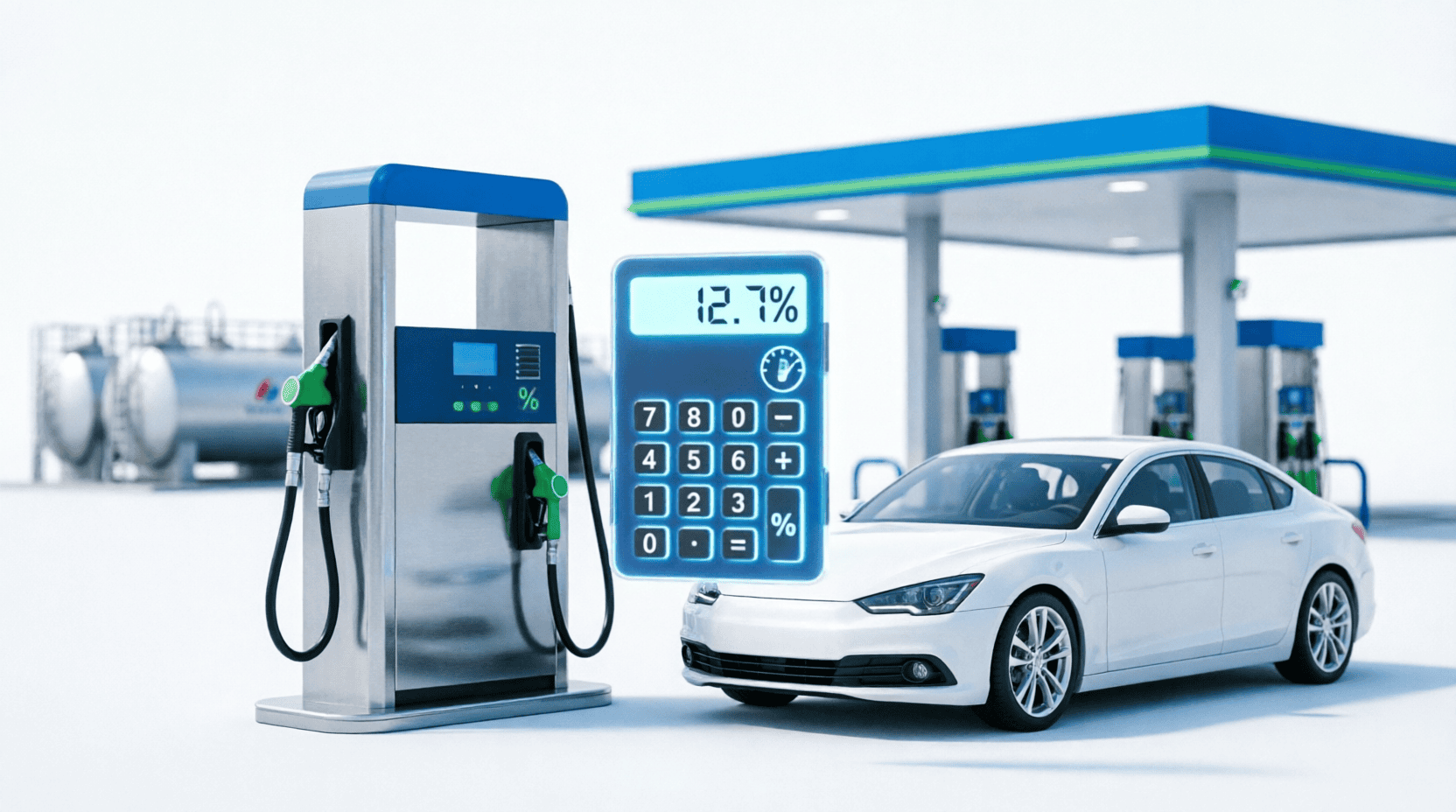
Fuel Loss & Shrinkage Calculator
Fuel is one of the highest operational expenses for transport companies, mining operations, and gas stations in Zambia. However, the fuel you purchase is rarely the exact amount that ends up in your vehicles’ tanks. “Fuel loss” or “shrinkage” occurs due to evaporation, temperature fluctuations, leaks, and unfortunately, theft. This Fuel Loss Calculator helps fleet managers and station owners quantify these losses in both liters and Kwacha, revealing the hidden financial drain on your business.
Fuel Loss & Shrinkage Calculator
Enter your fuel consumption and loss metrics to estimate financial impact
| Total Fuel Purchased (Liters) | Fuel Price (ZMW per Liter) |
| Estimated Loss Rate (%) | Reporting Period |
| Average Fleet Consumption (Liters / 100km) | |
Understanding Fuel Loss (Shrinkage)
In the logistics and petroleum retail industry, “fuel shrinkage” refers to the difference between the volume of fuel purchased (or dispensed from a bulk tank) and the volume actually utilized by vehicles or sold to customers. In Zambia, where temperatures can fluctuate drastically between the hot afternoons and cool nights, and where long-distance transport on rough roads is common, fuel loss is a significant operational challenge. Even a small percentage of loss translates to massive financial drains over a fiscal year.
Common Causes of Fuel Loss
Fuel loss is rarely caused by a single factor. It is usually a combination of physical, environmental, and human elements:
| Cause Category | Specific Factors | Impact Level |
|---|---|---|
| Environmental | Evaporation from tanks, thermal expansion/contraction due to temperature changes. | Low to Moderate (0.5% – 1%) |
| Mechanical | Leaking fuel lines, faulty seals on tankers, dripping injectors, worn-out fuel pumps. | Moderate to High |
| Operational | Spillage during refueling, overfilling tanks, poor dipstick measurement practices. | Low to Moderate |
| Theft / Pilferage | Siphoning from tanks, “fuel swapping” (diluting diesel with water/kerosene), false mileage claims. | Severe (Can exceed 5-10%) |
How the Calculation Works
This calculator uses a straightforward volume-to-value conversion to show you exactly what your shrinkage is costing your business. It also converts the lost volume into “wasted kilometers” to help fleet managers visualize the loss in terms of operational productivity.
2. Financial Cost (ZMW) = Volume Lost × Price per Liter
3. Wasted Distance (km) = (Volume Lost ÷ Avg Consumption per 100km) × 100
Example: If you buy 10,000 Liters a month at K32.50/L with a 2.5% loss rate, you lose 250 Liters. That costs K8,125—enough fuel to drive a heavy truck an extra 714 kilometers!
Worked Example
1. Volume Lost = 50,000 × 3% = 1,500 Liters
2. Financial Cost = 1,500 × K33.00 = K49,500 per month
3. Wasted Distance = (1,500 ÷ 40) × 100 = 3,750 km
Annual Impact: K49,500 × 12 = K594,000 lost annually. This is enough to buy a brand-new light delivery truck every year, simply lost to shrinkage!
Strategies to Reduce Fuel Loss
While you cannot entirely eliminate evaporation or thermal expansion, you can drastically reduce mechanical and human-caused losses through strict management protocols:
- Install Telematics and Fuel Sensors: Modern GPS trackers come with capacitive fuel sensors that detect sudden drops in fuel levels (indicating siphoning) and send instant alerts to the fleet manager’s phone.
- Use Anti-Siphon Devices: Install physical baffles and lockable caps on all vehicle and bulk storage tanks to prevent unauthorized access.
- Implement Strict Refueling SOPs: Refueling should only happen at designated, monitored stations. Require drivers to submit odometer readings before and after every fill-up, and cross-check this against the dispensed volume.
- Conduct Regular Dipstick Audits: For bulk storage tanks, perform manual dipstick measurements at the same time every day (preferably early morning when temperatures are stable) to accurately track inventory without the distortion of thermal expansion.
- Maintain Vehicles Regularly: A poorly tuned engine or a leaking fuel line will consume more fuel than the standard calculation accounts for. Routine maintenance is a direct fuel-saving measure.
Frequently Asked Questions
What is a “normal” fuel loss percentage?
For well-managed fleets and stations, a combined loss rate of 0.5% to 1.5% is considered normal, accounting for minor evaporation, thermal expansion, and minor spillage. Anything consistently above 2% warrants a thorough investigation into leaks or theft.
How does temperature affect fuel volume?
Fuel expands when it gets hot and contracts when it gets cold. If you measure your tank at 2:00 PM when it is 35°C, the volume will appear higher than if you measure it at 6:00 AM when it is 15°C, even though the actual mass of the fuel hasn’t changed. This is why professional fuel accounting uses “temperature-compensated volume” (measuring at a standard 15°C).
Can I claim fuel losses as a tax deduction in Zambia?
Normal operational fuel consumption is a deductible business expense. However, losses due to theft or gross negligence may require a police report and specific documentation to be accepted as a deductible loss by the Zambia Revenue Authority (ZRA). Always consult a registered tax practitioner.
How do I calculate fuel loss if I don’t know the exact purchase volume?
If you only have vehicle data, you can calculate expected consumption: (Total Distance Traveled ÷ 100) × Manufacturer Rated Consumption. Compare this “Expected Usage” to your “Actual Fuel Purchased.” The difference is your total loss.
This fuel loss calculator is provided for estimation and operational planning purposes only. Actual fuel shrinkage rates vary based on equipment, climate, and management practices. Always verify your fuel inventory using certified measurement tools and consult with a logistics or petroleum professional for precise auditing.