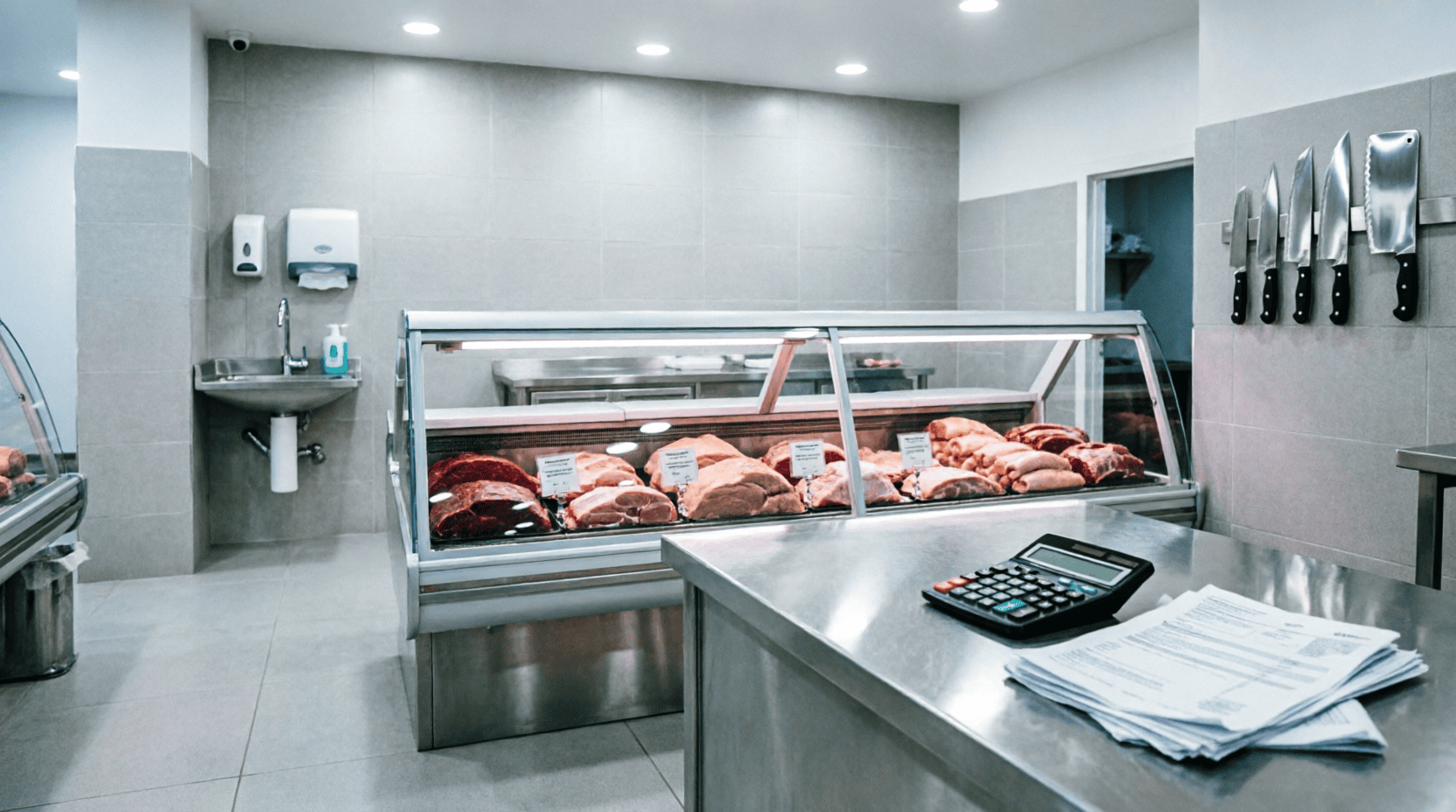
Butchery setup cost Calculator
Calculate the total investment required to launch a compliant, profitable meat shop in Zambia. This tool estimates costs for specialized shop space, refrigeration, butchery equipment, Ministry of Health licenses, and first-month operating expenses in Zambian Kwacha (ZMW).
Get a high-level estimate of your total butchery startup investment based on location and scale.
| Shop Size (sq. m) | Location Type | Butchery Scale |
Butcheries require specific renovations: tiled floors/walls, proper drainage, plumbing, and fly screens to meet Ministry of Health standards.
| Monthly Rent (ZMW) | Security Deposit (Months) |
| Tiling & Waterproofing | Plumbing & Drainage |
| Fly Screens & Doors | Signage |
Refrigeration and stainless steel equipment are your largest investments. Do not compromise on freezer quality due to load-shedding.
| Chest Freezers (Qty) | Cost per Freezer (ZMW) | Meat Display Counter |
| Meat Grinder / Mincer | Digital Scales (Certified) | Tables, Knives, Hooks, PPE |
Calculate the cost of your initial meat inventory and packaging materials.
| Initial Meat Stock Value (ZMW) | Packaging & Spices (ZMW) |
Butcheries face stricter health regulations than general shops. Ministry of Health meat inspection is mandatory.
| PACRA Registration | ZRA TPIN / License |
| Council Health Permit | Meat Inspection Certificate |
| Weights & Measures | Fire Certificate |
Butcheries have high utility usage (freezers) and require backup power planning for ZESCO load-shedding.
| Staff Salaries (Total) | ZESCO Electricity | Generator Fuel / Solar |
| Water Bill | Security | Miscellaneous |
Setting Up a Butchery in Zambia: Critical Considerations
Opening a butchery in Zambia requires more capital and stricter regulatory compliance than a general retail shop. The Ministry of Health enforces strict hygiene standards, and the constant threat of ZESCO load-shedding makes reliable refrigeration and backup power non-negotiable. This calculator helps you build a realistic, compliant budget.
1. Space & Renovation Requirements
Local councils and the Ministry of Health will not issue a permit for a butchery without specific structural features:
- Washable Surfaces: Walls must be tiled at least halfway up, and floors must be fully tiled with proper sloping for drainage.
- Plumbing: Dedicated hand-washing stations with soap and a separate area for cleaning equipment.
- Pest Control: Fly screens on all windows and doors, and proofing against rodents.
- Water Supply: Reliable running water is mandatory. A backup water tank (e.g., 1000L Jojo tank) is highly recommended.
2. Essential Butchery Equipment
Do not buy cheap, non-commercial freezers. Meat spoilage due to power outages is the #1 cause of butchery failure in Zambia.
- Commercial Chest Freezers: Minimum of 2 (300L+ each). Retain cold for 24-48 hours during load-shedding.
- Refrigerated Display Counter: For fresh cuts, sausages, and polony. Crucial for presentation and hygiene.
- Meat Grinder / Mincer: Essential for making mince, sausages, and burgers (higher margin products).
- Certified Digital Scales: Must be stamped by the Weights & Measures department.
- Stainless Steel Worktables: Easy to clean and meets health codes.
- Quality Knives, Cleavers, Steel, and Hooks: Invest in professional-grade tools for safety and efficiency.
- Backup Power: A reliable petrol/diesel generator or a dedicated solar inverter system for the freezers.
3. Regulatory & Compliance Checklist
Operating without these will result in immediate closure and confiscation of stock by local authorities:
- PACRA Registration: Business name registration.
- ZRA TPIN: For tax compliance.
- Local Council Health Permit: Issued after a physical inspection of the premises.
- Ministry of Health Meat Inspection Certificate: Verifies that your meat is sourced from approved, disease-free abattoirs.
- Weights & Measures Certification: Annual calibration of your weighing scales.
- Fire Brigade Certificate: Mandatory for all commercial premises.
- Medical Fitness Certificates: All butchery staff must have valid medical clearance proving they are free from communicable diseases.
4. First-Month Operating Realities
Your first month will test your cash flow. Key expenses include:
- Staff: A skilled butcher commands ZMW 2,500 – ZMW 4,000/month. Assistants/cleaners earn ZMW 1,200 – ZMW 1,800.
- Power: Freezers run 24/7. Budget heavily for ZESCO, plus generator fuel or solar maintenance.
- Water: Butcheries use significantly more water than standard shops for daily cleaning.
- Shrinkage: Factor in a 2-3% loss for trimming, evaporation, and unsold stock.
Pro Tips for Butchery Success in Zambia
- Value Addition is Key: Selling raw meat has thin margins. Making your own sausages, marinated meats, burgers, and polony can double your profit margin.
- Build Abattoir Relationships: Secure a direct, reliable supply chain from a reputable abattoir (e.g., Zambia Meat and Dairy, or reputable local slaughterhouses) to ensure consistent quality and better pricing.
- Hygiene is Your Best Marketing: A spotless, fly-free, well-lit butchery with uniformed, gloved staff builds immense customer trust in Zambia.
- Offer Delivery: Partner with local taxi or motorcycle riders to offer bulk meat delivery to households, lodges, and restaurants.
Frequently Asked Questions – Zambia Context
How much does it cost to start a butchery in Zambia?
A realistic, fully compliant small-to-medium butchery in an urban area requires between ZMW 150,000 and ZMW 250,000. This includes renovations, commercial freezers, initial stock, licenses, and first-month operating capital.
What is the most important equipment for a Zambian butchery?
Reliable chest freezers and a backup power source (generator or solar). ZESCO load-shedding can spoil thousands of Kwacha worth of meat in a single day if you are not prepared.
How do I get a Meat Inspection Certificate in Zambia?
You must apply through the local Ministry of Health office. A veterinary or health inspector will visit your premises to check hygiene, storage temperatures, and your meat supply source. You must provide proof of purchase from a licensed abattoir.
What is the average profit margin for a butchery in Zambia?
Gross margins on raw, unprocessed meat are typically 15% – 25%. However, value-added products like sausages, minced meat, and marinated cuts can yield gross margins of 40% – 60%.
Can I operate a butchery from my house?
Only if the residential area is legally zoned for commercial use, and you can meet all Ministry of Health structural requirements (tiled floors, separate drainage, fly screens, etc.). Most residential areas will not pass a council health inspection for a butchery.
Disclaimer: This calculator provides estimates for planning purposes only. Actual costs vary based on location, supplier negotiations, and current economic conditions. Always verify current license fees with PACRA, ZRA, and your local city/municipal council before starting your business.
Last Updated: 2024/2025 | Data Sources: Ministry of Health Zambia, PACRA, Local Government Authorities, Zambia Statistics Agency