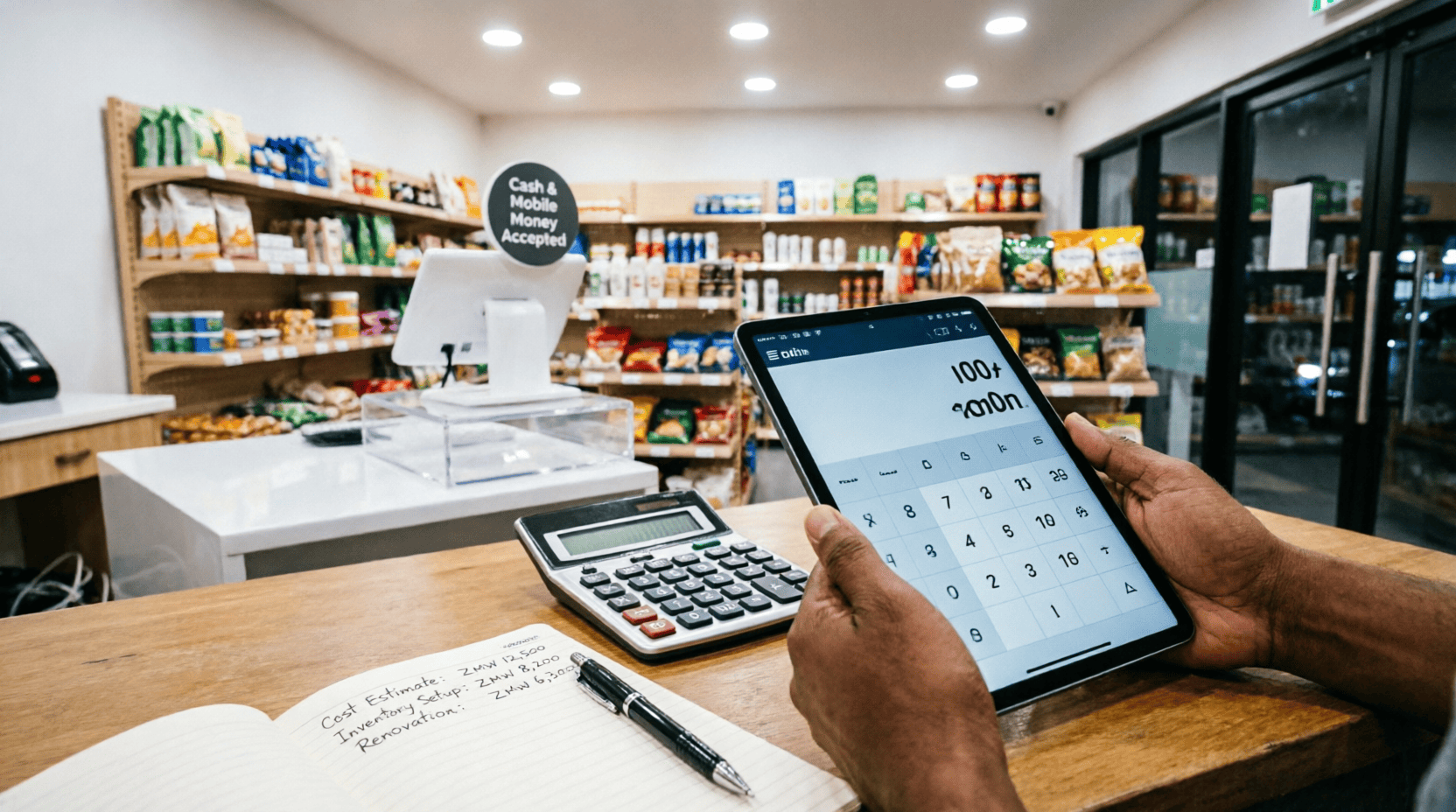
Shop setup cost Calculator
Zambia’s Premier Shop Setup Cost Calculator – Calculate the total investment required to launch a small retail shop in Zambia. This tool estimates costs for shop space, equipment, inventory, licenses, and first-month operating expenses in Zambian Kwacha (ZMW). Essential for Zambian entrepreneurs planning a retail business in Lusaka, Ndola, Kitwe, or any province.
Calculate the total investment required to launch your retail shop in Zambia. This includes all one-time setup costs plus your first month of operating expenses.
| Shop Size (sq. m) | Location Type | Shop Type |
Calculate the costs for your shop space, including rent, deposit, and basic improvements. Location type significantly impacts these costs in Zambia.
| Shop Size (sq. m) | Location Type |
| Monthly Rent (ZMW) | Security Deposit |
| Basic Improvements | Signage |
Calculate the costs for essential shop equipment, fixtures, and technology. This is a major one-time investment for your retail business.
| Shop Type | Counters & Shelves | Refrigeration |
| POS System | Security System | Lighting & Power |
Calculate the initial inventory investment needed for your shop. This varies significantly based on your product category and target market.
| Shop Type | Target Monthly Sales (ZMW) |
| Initial Stock Level | Gross Profit Margin |
Calculate the costs for all required licenses, registrations, and compliance fees to operate a legal retail business in Zambia.
| Business Structure | Shop Location |
| PACRA Registration | ZRA Business License |
| Local Council Permit | Health & Safety |
| Weights & Measures | Fire Certificate |
Calculate your first-month operating expenses including staff, utilities, and ongoing costs before your shop generates significant revenue.
| Staff Requirements | Shop Size (sq. m) |
| Staff Salaries (ZMW) | ZESCO Electricity |
| Water Bill | Security |
Setting Up a Retail Shop in Zambia: What You Need to Know
Starting a retail shop in Zambia requires careful financial planning. Unlike many other countries, Zambia has specific regulatory requirements and cost structures that impact your startup investment. This calculator helps you estimate all costs involved in launching a legal, compliant retail business in Zambia.
1. Shop Space Costs
The cost of securing your shop space is often the largest initial investment. In Zambia, this includes:
- Rent: Urban areas (Lusaka, Ndola, Kitwe): ZMW 150-300/m²; Township areas: ZMW 80-150/m²; Rural areas: ZMW 50-100/m²
- Security Deposit: Usually 1-2 months rent
- Basic Improvements: Painting, flooring, basic electrical work (ZMW 5,000-25,000)
- Signage: Basic signage costs ZMW 3,000-15,000 depending on location and quality
2. Equipment & Fixtures
Equipment costs vary significantly based on your shop type:
- Convenience Store: ZMW 50,000-70,000 (basic counters, shelves, refrigeration)
- Medium Retail Shop: ZMW 70,000-120,000 (more extensive fixtures, better refrigeration, POS system)
- Specialty Shop: ZMW 100,000+ (specialized equipment, high-quality fixtures)
Essential Equipment for Zambian Retail Shops:
| Item | Cost Range (ZMW) | Notes |
|---|---|---|
| Counters & Shelves | ZMW 15,000-40,000 | Basic wooden or metal counters |
| Refrigeration | ZMW 10,000-30,000 | Essential for food shops |
| POS System | ZMW 8,000-20,000 | Basic system with receipt printer |
| Security System | ZMW 5,000-15,000 | CCTV cameras and alarm system |
3. Initial Inventory Investment
For most retail shops in Zambia, your initial inventory investment should be 1-2 months’ worth of stock. This is critical for generating early sales:
- Convenience Store: Stock value typically 60-70% of target monthly sales
- Food & Grocery: Higher turnover, so stock value may be 50-60% of monthly sales
- Clothing & Textiles: Lower turnover, so stock value may be 70-80% of monthly sales
4. Regulatory & Compliance Requirements
Operating a legal retail business in Zambia requires multiple licenses and registrations:
- PACRA Registration: Mandatory business registration (ZMW 1,500-3,000)
- ZRA Business License: Required for tax purposes (ZMW 1,000-3,000)
- Local Council Permit: Issued by city/municipal council (ZMW 2,000-5,000)
- Health & Safety Certificate: Required for food shops (ZMW 1,500-3,000)
- Weights & Measures: For shops selling by weight/volume (ZMW 1,000-2,500)
- Fire Certificate: Mandatory for most retail premises (ZMW 1,500-3,000)
Key Regulatory Authorities in Zambia:
- PACRA: Patents and Companies Registration Agency
- ZRA: Zambia Revenue Authority
- Local Council: City or municipal council
- Ministry of Health: For food-related shops
- Ministry of Commerce: For weights and measures
- Fire Brigade: For fire safety certification
5. First-Month Operating Expenses
Your first month of operation will require significant cash flow, even if sales are lower than expected:
- Staff Salaries: Minimum wage in Zambia is ZMW 1,200/month for unskilled workers, but most shops pay ZMW 1,500-2,500
- Utilities: ZESCO electricity (ZMW 1,000-3,000), water (ZMW 500-1,500)
- Security: Guard services or security system monitoring (ZMW 1,500-3,000)
- Marketing: Initial promotion to attract customers (ZMW 1,000-3,000)
- Miscellaneous: Bank charges, stationery, etc. (ZMW 1,000-2,000)
Realistic Shop Setup Costs in Zambia
Here’s a realistic breakdown for a 20m² convenience store in Lusaka:
- Shop Space Costs: ZMW 35,000 (rent deposit + improvements)
- Equipment & Fixtures: ZMW 65,000 (counters, shelves, refrigeration)
- Initial Inventory: ZMW 30,000 (1 month stock)
- Licenses & Compliance: ZMW 12,000 (all required permits)
- First-Month Operating: ZMW 18,000 (salaries, utilities, security)
- Total Investment: ZMW 160,000
Common Mistakes by New Shop Owners in Zambia
- Underestimating Regulatory Costs: Many entrepreneurs skip essential permits to save money, but this leads to fines or shutdowns.
- Overstocking Initially: Buying too much inventory ties up cash that should be used for operating expenses.
- Ignoring ZESCO Load-Shedding: Not planning for power outages can ruin your refrigerated stock.
- Underestimating Staff Costs: Failing to budget for proper staff salaries leads to high turnover.
- Poor Location Choice: Choosing a location with low foot traffic severely impacts sales potential.
Pro Tips for Shop Setup Success in Zambia
- Start Small: Begin with a modest shop size and expand as your business grows.
- Negotiate with Suppliers: Many suppliers offer credit terms to new shops, improving cash flow.
- Invest in Solar Power: With ZESCO load-shedding, solar power for lighting and refrigeration can save ZMW 1,500-2,500/month.
- Build Relationships: Strong relationships with local council officials help with permits and inspections.
- Plan for Power Outages: Have backup generators for refrigeration and lighting during load-shedding.
Frequently Asked Questions – Zambia Context
How much capital do I need to start a small shop in Zambia?
A realistic minimum investment for a small 15-20m² convenience store in Zambia is ZMW 100,000-150,000. This covers shop space, basic equipment, initial inventory, licenses, and first-month operating expenses.
What licenses do I need to operate a shop in Zambia?
You need: (1) PACRA business registration, (2) ZRA business license, (3) Local council permit, (4) Health & safety certificate (for food shops), (5) Weights & measures certification, and (6) Fire certificate. The total cost ranges from ZMW 10,000-15,000.
How much should I budget for initial inventory?
For most retail shops in Zambia, budget 60-70% of your target monthly sales for initial inventory. If you expect to sell ZMW 40,000/month, you should invest ZMW 24,000-28,000 in initial stock.
What are the biggest cost drivers for shop setup in Zambia?
The three biggest cost drivers are: (1) Shop space (rent and improvements), (2) Equipment and fixtures, and (3) Initial inventory. These typically account for 70-80% of your total startup investment.
How can I reduce my shop setup costs in Zambia?
You can: (1) Start in a township or rural location (lower rent), (2) Use second-hand equipment, (3) Negotiate with suppliers for credit terms, (4) Handle some setup tasks yourself, (5) Start with a smaller shop size and expand later.
Disclaimer: This calculator provides estimates only. Actual costs may vary based on location, shop size, and specific business requirements. Always consult with a business advisor and verify current fees with the relevant authorities before starting your business. This tool is for planning purposes only and not financial advice.
Last Updated: 2024/2025 | Data Sources: PACRA, ZRA, Lusaka City Council, Zambia Statistics Agency