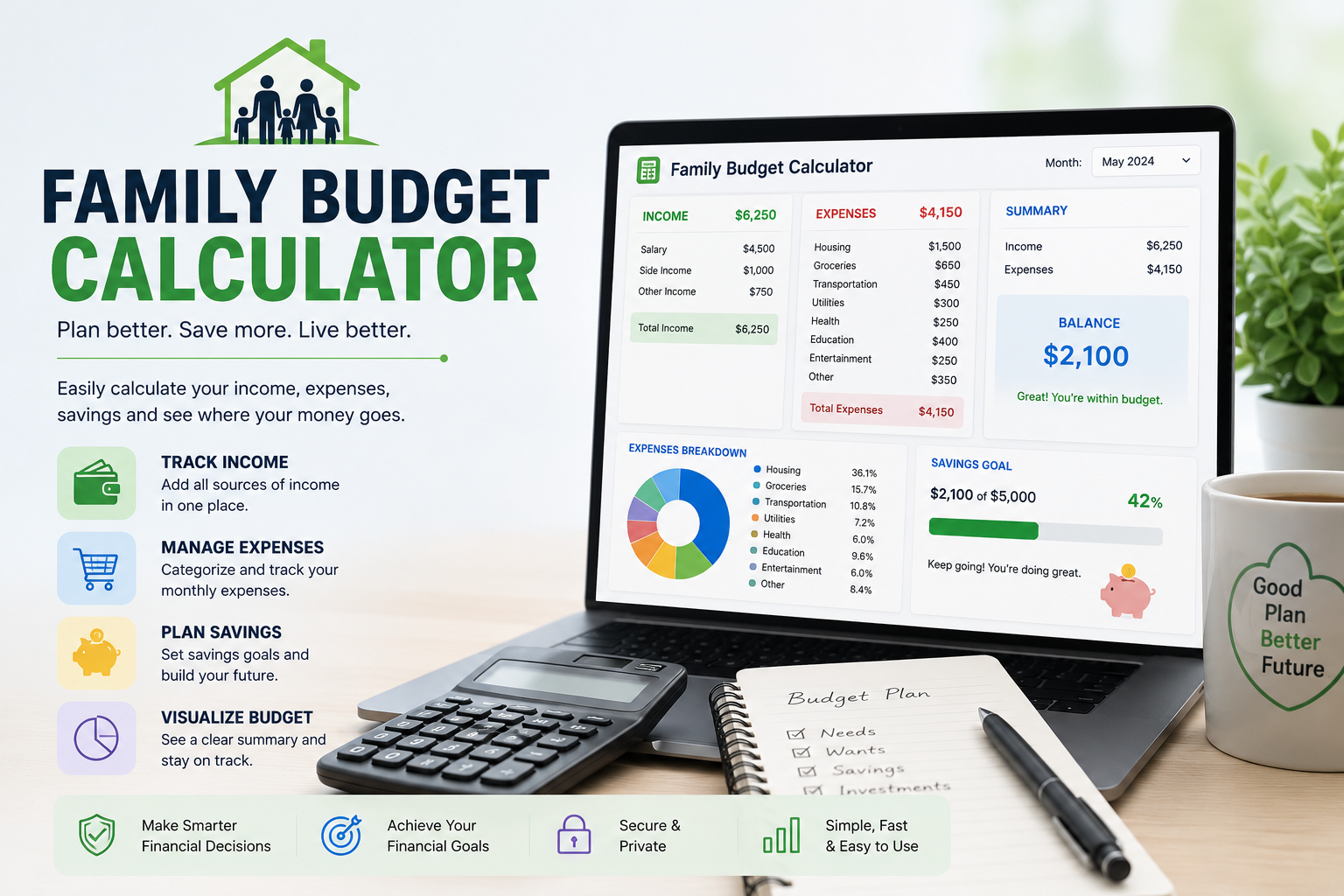
Family budget Calculator
The Family Budget Calculator helps you create and manage a comprehensive monthly budget for your household. By tracking income sources and expense categories, you can understand your spending patterns, identify areas to cut costs, and plan for savings and financial goals. This tool is useful for monthly planning, expense control, debt management, and building financial stability for your family. Always consult with a financial advisor for personalized financial planning.
Family Budget Calculator
Create a simple budget by entering your monthly income and basic expense categories.
| Monthly Income (ZMW) | Number of Dependents |
Monthly Expenses (ZMW)
Create a detailed budget with advanced expense tracking and budget percentages.
| Monthly Income (ZMW) | Debt Payments (ZMW) | Savings Target (% of income) |
Set budget goals and track your progress toward financial targets.
| Monthly Income (ZMW) | Current Expenses (ZMW) | Savings Goal (ZMW) | Months to Goal |
Understanding Family Budgets
A family budget is a detailed plan that outlines your household’s income and expenses on a monthly or yearly basis. Creating a budget helps you understand where your money goes, control spending, plan for future goals, and build financial stability. A well-managed budget reduces financial stress, prevents overspending, and enables you to save for emergencies and long-term goals. For comprehensive financial planning, explore our Zamcash Calculator, Nutrition Calculator, and Sleep Duration Calculator to support your overall family wellness and financial health.
The 50/30/20 Budget Rule
The 50/30/20 budget rule is a simple yet effective framework for allocating your after-tax income across three categories: 50% for needs, 30% for wants, and 20% for savings and debt repayment. This approach provides a balanced structure that ensures you cover essential expenses while also building financial security and enjoying life. Let’s explore each category in detail:
| Budget Category | Percentage | Examples | Purpose |
|---|---|---|---|
| Needs (50%) | 50% of income | Housing, utilities, groceries, transportation, insurance, healthcare | Essential expenses required for basic living and survival |
| Wants (30%) | 30% of income | Entertainment, dining out, hobbies, vacation, subscriptions, personal care | Non-essential spending that improves quality of life and happiness |
| Savings & Debt (20%) | 20% of income | Emergency fund, retirement, debt payments, investments, savings goals | Building financial security and working toward long-term goals |
Essential Budget Categories
Understanding common budget categories helps you organize your expenses and identify areas where you can save money. Here are the primary expense categories most families track:
Housing (Largest Expense)
Housing costs include rent or mortgage payments, property taxes, home insurance, maintenance, and repairs. Housing typically accounts for 25-35% of gross income. Financial experts recommend that housing costs shouldn’t exceed 28-30% of your gross monthly income. If your housing costs are higher, you may need to find more affordable housing or increase your income.
Food & Groceries
Food expenses include groceries for home meals and dining out. A reasonable food budget is typically 5-15% of income, depending on family size and dining habits. Meal planning, cooking at home, and reducing restaurant visits can significantly reduce food expenses.
Utilities & Services
This category includes electricity, water, internet, phone service, and other utilities. Typical utility costs range from 5-10% of income. Energy-efficient practices can reduce these costs substantially.
Transportation
Transportation expenses include car payments, fuel, insurance, maintenance, and public transportation. This category typically represents 10-18% of income. Consider reliable, fuel-efficient vehicles and proper maintenance to minimize costs.
Healthcare & Insurance
Healthcare costs include health insurance premiums, medical visits, medications, and wellness expenses. This category typically accounts for 5-10% of income depending on your health insurance plan.
Steps to Create an Effective Family Budget
1. Track Your Current Spending
Before creating a budget, track all expenses for 1-3 months to understand your actual spending patterns. Use receipts, bank statements, and credit card records to categorize expenses accurately.
2. Calculate Your Total Income
Include all household income sources: primary employment, secondary income, side businesses, investments, and benefits. Use net income (after taxes) for budgeting purposes.
3. List All Expenses
Create a comprehensive list of all monthly expenses organized by category. Include both fixed expenses (rent, insurance) and variable expenses (groceries, entertainment).
4. Set Budget Targets
Allocate percentages of your income to each category based on the 50/30/20 rule or adjust based on your family’s priorities and circumstances.
5. Monitor and Adjust
Review your budget monthly to track spending against targets. Identify areas of overspending and make adjustments. Be flexible and adjust your budget as your circumstances change.
Benefits of Creating and Following a Budget
- Control spending and prevent overspending on non-essential items
- Identify areas where you can reduce expenses and save money
- Plan and save for important goals (home, education, vacation, retirement)
- Build an emergency fund for unexpected expenses
- Pay off debt systematically and improve financial health
- Reduce financial stress and improve family relationships
- Track progress toward long-term financial goals
- Make informed financial decisions based on actual data
- Prepare for major life events and transitions
- Achieve financial independence and security
Common Budgeting Mistakes to Avoid
1. Not Tracking Expenses Accurately
Without accurate expense tracking, you won’t know where your money goes. Use apps, spreadsheets, or tools to record every expense and review regularly.
2. Forgetting Hidden or Irregular Expenses
Don’t overlook annual or quarterly expenses like car registration, home maintenance, holiday gifts, and clothing. Divide these by 12 and include them in your monthly budget.
3. Setting Unrealistic Budgets
A budget must be realistic based on your actual spending patterns. Overly restrictive budgets are unsustainable. Gradual changes are more effective than drastic cuts.
4. Ignoring the Emergency Fund
An emergency fund (3-6 months of expenses) is essential. Without it, unexpected expenses force you into debt. Prioritize building an emergency fund early.
5. Not Involving Family Members
A family budget works best when all adults participate in planning and tracking. Discuss goals, priorities, and spending limits together to ensure buy-in and cooperation.
Budget Adjustment Strategies
| Situation | Budget Adjustment Strategy | Expected Impact |
|---|---|---|
| Income Increase | Allocate portion to savings/investments; avoid lifestyle inflation | Builds wealth and increases financial security |
| Income Decrease | Reduce “wants” category first; seek cost savings on “needs” | Maintains essential expenses while cutting discretionary spending |
| New Debt or Obligation | Adjust savings temporarily; create debt payoff plan | Ensures debt management while maintaining financial stability |
| Overspending in Category | Identify causes; implement spending controls; reduce category allocation | Prevents budget overruns in future months |
Frequently Asked Questions
What’s a realistic emergency fund target?
A good emergency fund should cover 3-6 months of living expenses. Start with one month and gradually build up. For families with variable income or dependents, aim for 6+ months of expenses.
How often should I review my budget?
Review your budget monthly to track spending and make adjustments. Conduct a comprehensive budget review quarterly or annually to align with life changes and adjust long-term goals.
Should I include debt payments in my budget?
Yes, debt payments should be included in the “Savings & Debt” category (20%). Allocate funds strategically between current debt payments and building savings for future goals.
How can I involve children in budget planning?
Teach children age-appropriate financial concepts. Older kids can help track expenses and understand the family budget. This builds financial literacy and responsibility.
What if my budget doesn’t balance?
If expenses exceed income, identify areas to cut: reduce “wants,” find cost savings on “needs,” or look for ways to increase income. Create a plan to address the shortfall.
Can I adjust the 50/30/20 rule?
Yes, the 50/30/20 rule is a guideline, not a strict requirement. Adjust percentages based on your family’s circumstances, priorities, and life stage. The key is creating a sustainable, intentional plan.
Disclaimer: This Family Budget Calculator provides estimates and guidelines based on common budgeting practices. Individual family circumstances vary significantly based on income, expenses, location, family size, and personal priorities. These recommendations should not replace personalized financial advice. Consult with a certified financial planner or advisor for customized budgeting guidance tailored to your specific situation and goals.