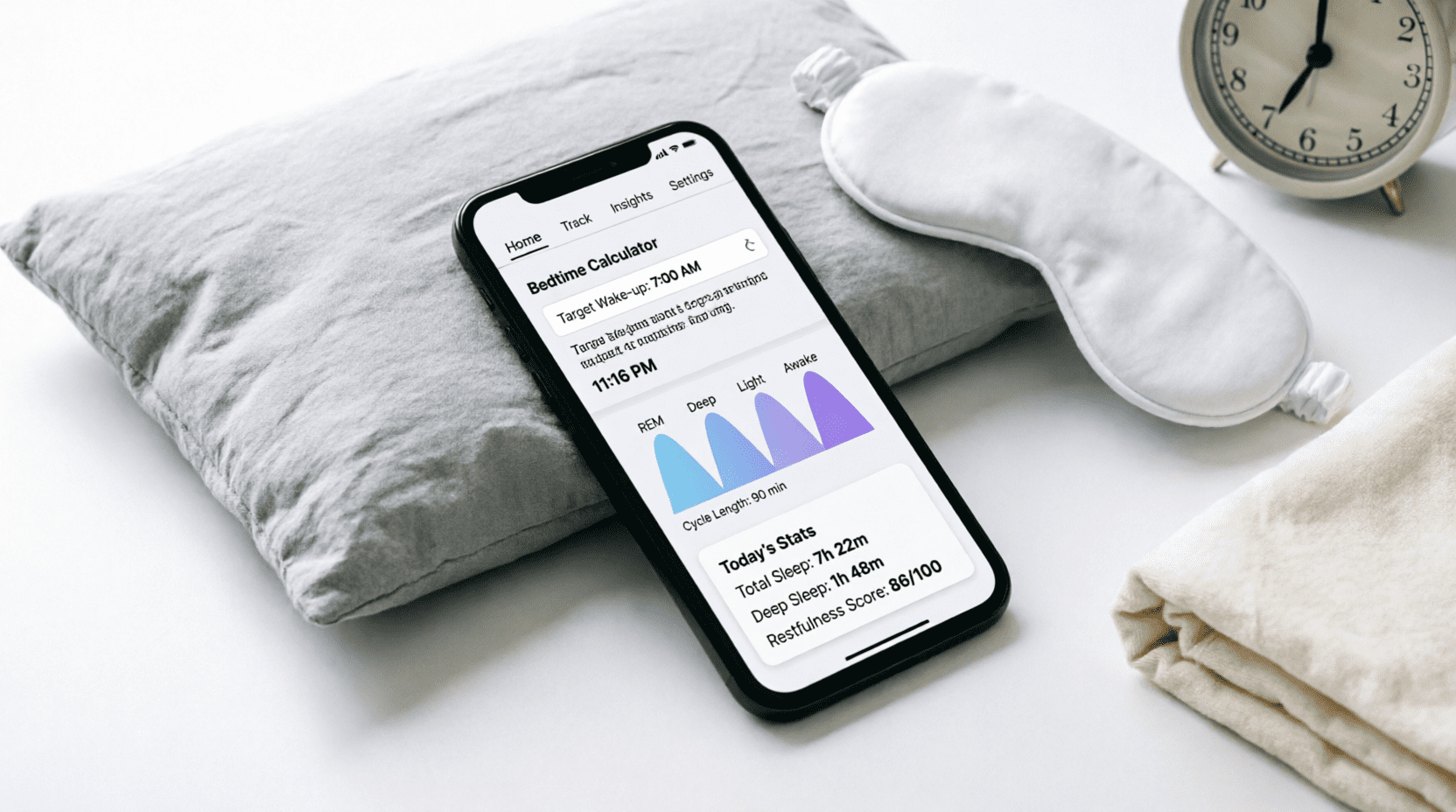
Sleep Duration Calculator
The Sleep Duration Calculator helps you determine your recommended daily sleep duration based on your age, activity level, and lifestyle factors. By calculating your personalized sleep needs, you can understand how many hours of sleep your body requires for optimal health, recovery, and cognitive function. This tool is useful for improving sleep habits, enhancing athletic recovery, and managing overall wellness. Always consult with a healthcare provider or sleep specialist for personalized sleep guidance.
Sleep Duration Calculator
Calculate your personalized sleep recommendations based on your age and lifestyle.
| Age (years) | Activity Level | Stress Level | Sleep Quality |
See how different activity levels affect your sleep requirements.
| Age (years) | Select Activity Level |
Understanding Sleep Duration
Sleep is a fundamental biological process that allows your body and mind to recover, consolidate memories, regulate hormones, and maintain overall health. Sleep duration refers to the total time spent sleeping per day, typically measured in hours. Your daily sleep needs depend on several factors: your age, which is the primary determinant; your activity level and exercise frequency; your stress levels; your sleep quality; and your individual genetics. Understanding your optimal sleep duration is critical for managing your weight, enhancing athletic performance, improving mental health, and preventing chronic diseases. For additional wellness insights, explore our Calorie Calculator, BMI Calculator, and Stress Management tools to support your overall health goals.
Sleep Recommendations by Age Group
Sleep requirements change significantly throughout the lifespan. The National Sleep Foundation (NSF) and American Academy of Sleep Medicine (AASM) provide age-specific guidelines based on extensive research:
| Age Group | Recommended Sleep Duration | Key Characteristics |
|---|---|---|
| Newborns (0-3 months) | 14-17 hours/day | Highly variable; includes multiple naps; essential for brain development |
| Infants (4-12 months) | 12-16 hours/day | Consolidated sleep beginning; still includes naps |
| Toddlers (1-2 years) | 11-14 hours/day | Nighttime sleep becoming primary; naps still important |
| Preschoolers (3-5 years) | 10-13 hours/day | One nap per day typical; consistent bedtime important |
| School-age (6-12 years) | 9-12 hours/day | Naps typically cease; consistent sleep schedule essential for learning |
| Teenagers (13-18 years) | 8-10 hours/day | Circadian rhythm shifts later; often chronically sleep deprived |
| Adults (18-64 years) | 7-9 hours/day | Optimal range; varies by individual; most need 8 hours |
| Older adults (65+ years) | 7-8 hours/day | Often more fragmented; quality may be affected; daytime naps common |
How Activity Level Affects Sleep Needs
Physical activity and exercise intensity significantly influence how much sleep your body requires. When you exercise, your muscles experience microscopic damage that must be repaired during sleep. Additionally, intense exercise creates a greater energy demand, requiring more restorative sleep. Here’s how different activity levels affect sleep requirements:
| Activity Level | Exercise Frequency | Sleep Recommendation | Reason |
|---|---|---|---|
| Sedentary | Minimal or no exercise | 7-8 hours | Lower physical demand; standard sleep needs |
| Lightly Active | 1-2 days/week exercise | 7-9 hours | Moderate physical demand; slight increase in recovery needs |
| Moderately Active | 3-4 days/week exercise | 8-9 hours | Regular exercise; increased muscle repair and recovery |
| Very Active | 5-6 days/week exercise | 8-10 hours | Significant physical demand; substantial recovery time needed |
| Extremely Active | Daily intense training or physical job | 9-11 hours | Major physical stress; critical for adaptation and performance |
Benefits of Adequate Sleep
- Physical recovery and repair — Sleep is when your body repairs tissue damage, builds muscle protein, and releases growth hormone for physical development
- Immune function — Adequate sleep strengthens your immune system and increases production of cytokines that fight infection and illness
- Cognitive function and memory — Sleep consolidates memories and improves concentration, learning ability, problem-solving, and creative thinking
- Mental health and mood — Quality sleep reduces risk of depression, anxiety, and mood disorders; improves emotional regulation
- Metabolism and weight management — Sleep regulates hunger hormones (ghrelin and leptin); sleep deprivation increases appetite and weight gain risk
- Cardiovascular health — Sufficient sleep reduces blood pressure, heart rate, and risk of heart disease and stroke
- Athletic performance — Athletes sleeping 8-10 hours show improved reaction time, accuracy, strength, and endurance
- Reduced inflammation — Sleep decreases inflammatory markers associated with chronic disease, autoimmune conditions, and aging
- Hormonal balance — Sleep regulates cortisol, melatonin, testosterone, growth hormone, and insulin
- Injury prevention — Well-rested individuals have better coordination, reaction time, and awareness, reducing accident risk
Risks of Sleep Deprivation
- Weakened immune function — Increased susceptibility to colds, flu, infections; reduced vaccine effectiveness
- Weight gain and obesity — Sleep deprivation increases hunger hormones and decreases satiety signals, promoting overeating
- Type 2 diabetes — Impaired glucose regulation and increased insulin resistance with chronic sleep loss
- Cardiovascular disease — Elevated blood pressure, heart rate, and increased risk of heart attack and stroke
- Mental health disorders — Increased risk of depression, anxiety, bipolar disorder, and suicidal ideation
- Cognitive decline — Impaired memory, concentration, decision-making, learning, and increased dementia risk
- Accident and injury risk — Reduced alertness increases motor vehicle accidents and workplace injuries (similar to intoxication)
- Weakened bone health — Sleep deprivation affects calcium metabolism and reduces bone density
- Reduced pain tolerance — Sleep loss lowers pain threshold and worsens chronic pain conditions
- Reduced life expectancy — Chronic sleep deprivation associated with increased overall mortality risk
Risks of Excessive Sleep
While less common, consistently sleeping more than 10 hours per night may also indicate health concerns:
- Sleep disorders — Excessive daytime sleepiness may indicate sleep apnea, narcolepsy, or idiopathic hypersomnia
- Depression and mental health — Excessive sleep often accompanies depression and other mood disorders
- Metabolic dysfunction — Excessive sleep linked to increased risk of obesity and type 2 diabetes
- Cardiovascular risk — Some studies show very long sleep durations associated with increased heart disease and stroke risk
- Cognitive decline — Excessive sleep sometimes linked with cognitive impairment in older adults
Limitations of Sleep Calculators
While sleep duration recommendations are useful guidelines, they have important limitations that should be understood:
Sleep Formula and Calculation
Basic sleep recommendation calculation considers your age and adjusts for activity level and stress:
Tips for Optimizing Your Sleep
| Strategy | Implementation | Benefits |
|---|---|---|
| Consistent Schedule | Sleep and wake at same time daily, within 30 minutes | Synchronizes circadian rhythm; improves sleep quality |
| Sleep Environment | Keep bedroom dark, cool (65-68°F), and quiet | Promotes deeper sleep; reduces sleep disruptions |
| Limit Screen Time | Stop screens 1-2 hours before bed | Blue light suppresses melatonin; improves sleep onset |
| Exercise Regularly | 30 minutes moderate activity most days; not within 3 hours of bed | Improves sleep quality; increases deep sleep time |
| Manage Caffeine | Avoid caffeine after 2 PM; has 5-6 hour half-life | Prevents sleep disruption and reduced sleep time |
| Limit Alcohol | Avoid 3-4 hours before bed | Prevents sleep fragmentation; improves sleep architecture |
| Manage Stress | Meditation, deep breathing, journaling before bed | Reduces racing thoughts; improves sleep onset |
Frequently Asked Questions
Can I “catch up” on sleep on weekends?
Partial recovery is possible, but chronic sleep deprivation cannot be fully compensated by weekend sleep. While one night of extra sleep helps, regular sleep debt affects health even if you sleep more on weekends. Consistency is more important than occasional longer sleep.
Do sleep needs decrease with age?
Not significantly. While sleep patterns change (more fragmented, earlier wake times), actual sleep need remains relatively stable at 7-8 hours for older adults. Decreased sleep in elderly often reflects sleep disorders rather than reduced need.
Is 6 hours of sleep enough?
For most adults, 6 hours is insufficient and associated with impaired cognitive function and health risks. However, about 1% of the population (short sleepers) naturally function well on 6 hours due to genetics. If you consistently feel rested on 6 hours, you may be a natural short sleeper; otherwise, aim for 7-9 hours.
Does exercise increase sleep needs?
Yes. Regular exercise, especially intense training, increases sleep requirements. Athletes training 1-2 hours daily often need 8-10 hours for proper recovery. Without adequate sleep, athletic performance and recovery suffer significantly.
What if I can’t sleep the recommended hours due to work?
Prioritize sleep quality and consistency by maintaining regular sleep/wake times, optimizing your sleep environment, and taking strategic 20-30 minute naps if possible. Consult a sleep specialist if shift work is unavoidable; some techniques minimize health impacts.
Is more sleep always better?
Not necessarily. While 7-9 hours is optimal for most adults, consistently sleeping more than 10 hours may indicate an underlying condition like sleep apnea, depression, or neurological issues. Excessive sleep should be evaluated by a healthcare provider.
Disclaimer: This sleep calculator provides general age-based recommendations aligned with NSF and AASM guidelines. Individual sleep needs vary significantly based on genetics, health status, medications, and personal factors. These recommendations should not replace professional medical advice. Consult a sleep specialist or healthcare provider if you experience insomnia, excessive daytime sleepiness, or suspect a sleep disorder.