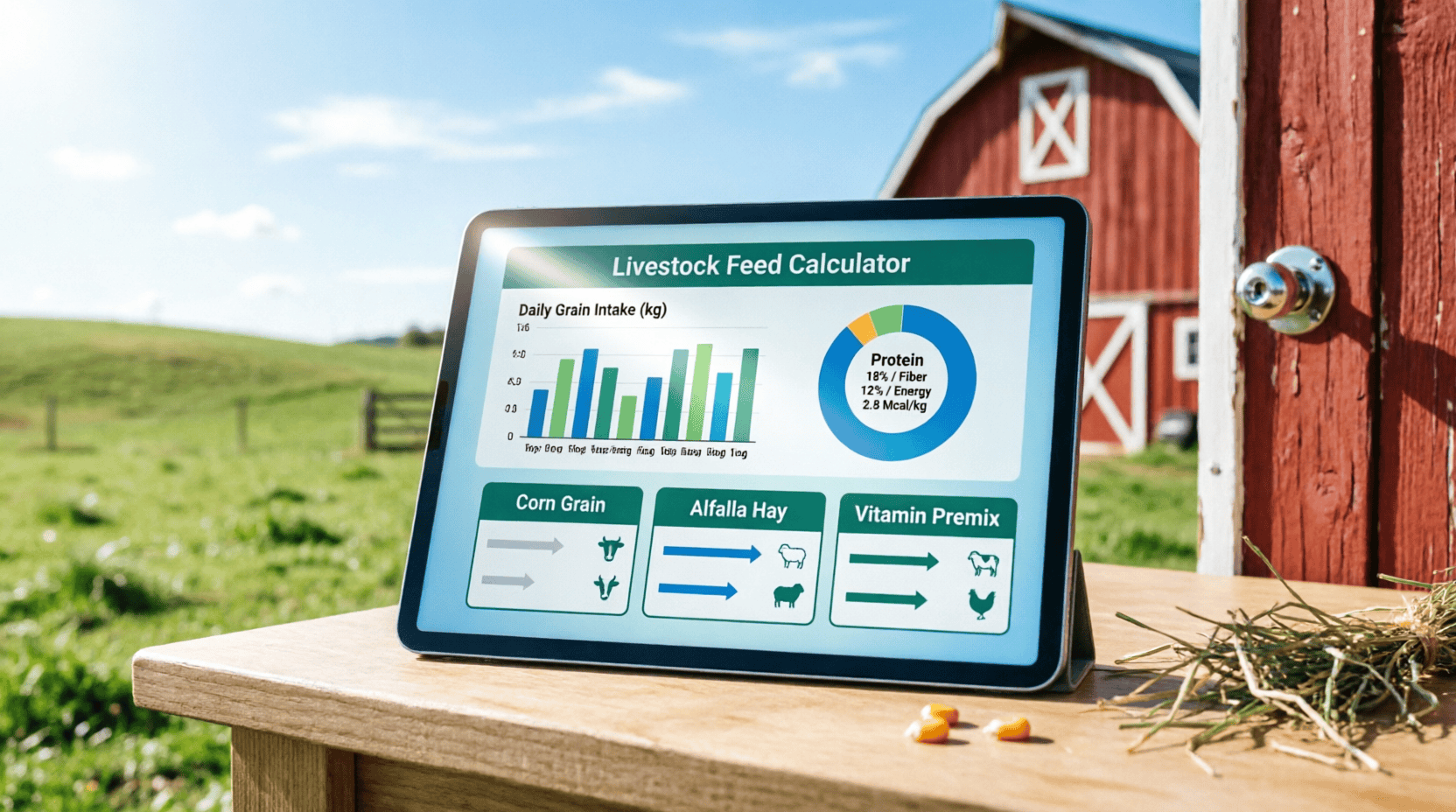
Livestock Feed Calculator
This livestock feed calculator estimates total feed requirements and feed costs for the most common animals kept by Zambian farmers — broilers, layers, pigs, cattle, and goats. Enter your flock or herd size, adjust the feed price per bag to match your local supplier, and see your total feed budget for the production cycle.
Livestock Feed Calculator
Broilers typically consume 3.0–3.5 kg of feed per bird over a 6-week cycle. Adjust defaults to match your farm and local prices.
| Number of Birds | Feed per Bird (kg) |
| Feed Price per 50kg Bag (ZMW) | Mortality Rate (%) |
Layers consume approximately 110–120 g of feed per bird per day. This calculator estimates monthly or annual feed costs for your laying flock.
| Number of Layers | Feed per Bird per Day (g) |
| Feed Price per 50kg Bag (ZMW) | Period |
Pigs consume 2.5–3.5 kg of feed per day depending on growth stage. This covers a full grow-out cycle from weaner to market weight (approximately 90–120 days).
| Number of Pigs | Feed per Pig per Day (kg) |
| Feed Price per 50kg Bag (ZMW) | Grow-out Period (days) |
Supplementary feed for cattle is typically 2–4 kg per animal per day on top of grazing or roughage. Dry season supplementation is most critical.
| Number of Cattle | Supplement per Animal per Day (kg) |
| Feed Price per 50kg Bag (ZMW) | Period |
Goats need 0.5–1.0 kg of supplementary concentrate per day on top of browse and grazing. Increase for pregnant or lactating does.
| Number of Goats | Supplement per Goat per Day (kg) |
| Feed Price per 50kg Bag (ZMW) | Period |
Understanding Livestock Feed Requirements in Zambia
Feed is the single largest expense in livestock farming, often accounting for 60% to 80% of total production costs. Accurate feed budgeting is essential to ensure your animals receive adequate nutrition without eroding your profit margins. This calculator provides baseline estimates for the most common livestock enterprises in Zambia.
Feed Formulation and Sourcing
While commercial feed bags offer convenience and guaranteed nutritional balance, many Zambian farmers reduce costs by mixing their own rations. Common local ingredients include:
- Maize (Corn): The primary energy source. Must be ground and often requires supplementation with amino acids.
- Soya Bean Meal: The best local source of plant-based protein. Must be roasted or toasted to remove anti-nutritional factors.
- Wheat Bran / Maize Bran: Good sources of fiber and phosphorus, often used as a filler and digestive aid.
- Mineral Premixes & Salt: Critical for bone development, milk production, and overall metabolic health. Never skip these.
Seasonal Feeding Strategies
Zambia’s distinct wet (November–April) and dry (May–October) seasons dramatically impact feed availability and cost:
- Wet Season: Natural pasture is abundant and nutritious. Supplementary feeding can be minimized for grazing animals, though poultry and pigs still require full commercial or mixed rations.
- Dry Season: Pasture quality drops significantly (low protein, high fiber). This is when supplementary feeding for cattle and goats becomes critical to prevent weight loss and maintain milk production. Feed prices also tend to peak during this time due to high demand and lower maize availability.
Frequently Asked Questions
How much does a 50kg bag of livestock feed cost in Zambia?
Prices fluctuate based on the season, ingredient costs (especially maize and soya), and the brand. As of recent estimates, poultry and pig feed ranges from K180 to K250 per 50kg bag, while cattle and goat supplements may range from K150 to K220 per 50kg bag.
Can I feed pigs only kitchen scraps and forage?
While pigs are omnivores and will eat scraps, a diet consisting solely of kitchen waste will result in very slow growth rates and poor feed conversion ratios (FCR). For commercial profitability, pigs require a balanced ration with at least 16-18% crude protein.
Why is my cattle losing weight even with supplementary feed?
Weight loss can be caused by several factors: the supplement quantity is too low, the roughage quality is too poor to support the supplement, internal parasites (worms) are stealing nutrients, or there is an underlying disease (e.g., East Coast Fever). Consult a local vet or extension officer for a proper diagnosis.
Is this calculator official?
No. This is an independent estimation tool for farm planning. Actual feed consumption varies widely based on animal breed, health status, ambient temperature, and feed quality. Always consult with the Ministry of Agriculture or a qualified animal nutritionist for specific herd/flock advice.
This Livestock Feed Calculator is provided for informational and agribusiness planning purposes only. It does not constitute financial or veterinary advice. Actual farming results depend on environmental conditions, management practices, and market dynamics.