


🤰 Safe Motherhood in Zambia
Your Comprehensive Guide to a Healthy Pregnancy
Pregnancy is one of the most transformative journeys in a woman’s life. In Zambia, “Safe Motherhood” is a national priority aimed at ensuring that every mother survives childbirth and every baby gets a healthy start to life. This guide covers everything you need to know about Antenatal Care (ANC), your maternal rights, nutrition, and how to recognize danger signs.
📅 Pregnancy Due Date Calculator
Enter your details to estimate your due date and current pregnancy week
| First Day of Last Period (LMP) | Average Cycle Length (Days) |
Calculation Breakdown:
| Item | Detail | Amount / Date |
|---|
💖Your Maternal Rights: Free Healthcare
One of the most important things every expectant mother in Zambia should know is that maternity care is free at public health facilities. Under the government’s Universal Health Coverage (UHC) policy, user fees have been abolished for pregnant women and children under five years old.
✅ All Antenatal Care (ANC) visits
✅ Laboratory tests (HIV, Syphilis, Blood Group, Urine analysis)
✅ Delivery services (Normal and Caesarean Section)
✅ Postnatal care
✅ Essential medications (Iron/Folic acid, Malaria prophylaxis)
✅ Immunizations for the baby
Note: You only pay if you choose to seek care at a private hospital or clinic. At government clinics and hospitals, you should not be charged for these standard services.
🏥The Antenatal Care (ANC) Journey
The Zambian Ministry of Health follows the World Health Organization’s Focused Antenatal Care (FANC) model. Instead of just checking your weight, this model focuses on identifying and managing risks early. You should aim to have at least 8 contacts with a healthcare provider during your pregnancy.
| Contact | When? | What Happens? |
|---|---|---|
| 1st Contact | Before 12 Weeks | Confirm pregnancy, blood tests, HIV/Syphilis screening, start Iron/Folic Acid. |
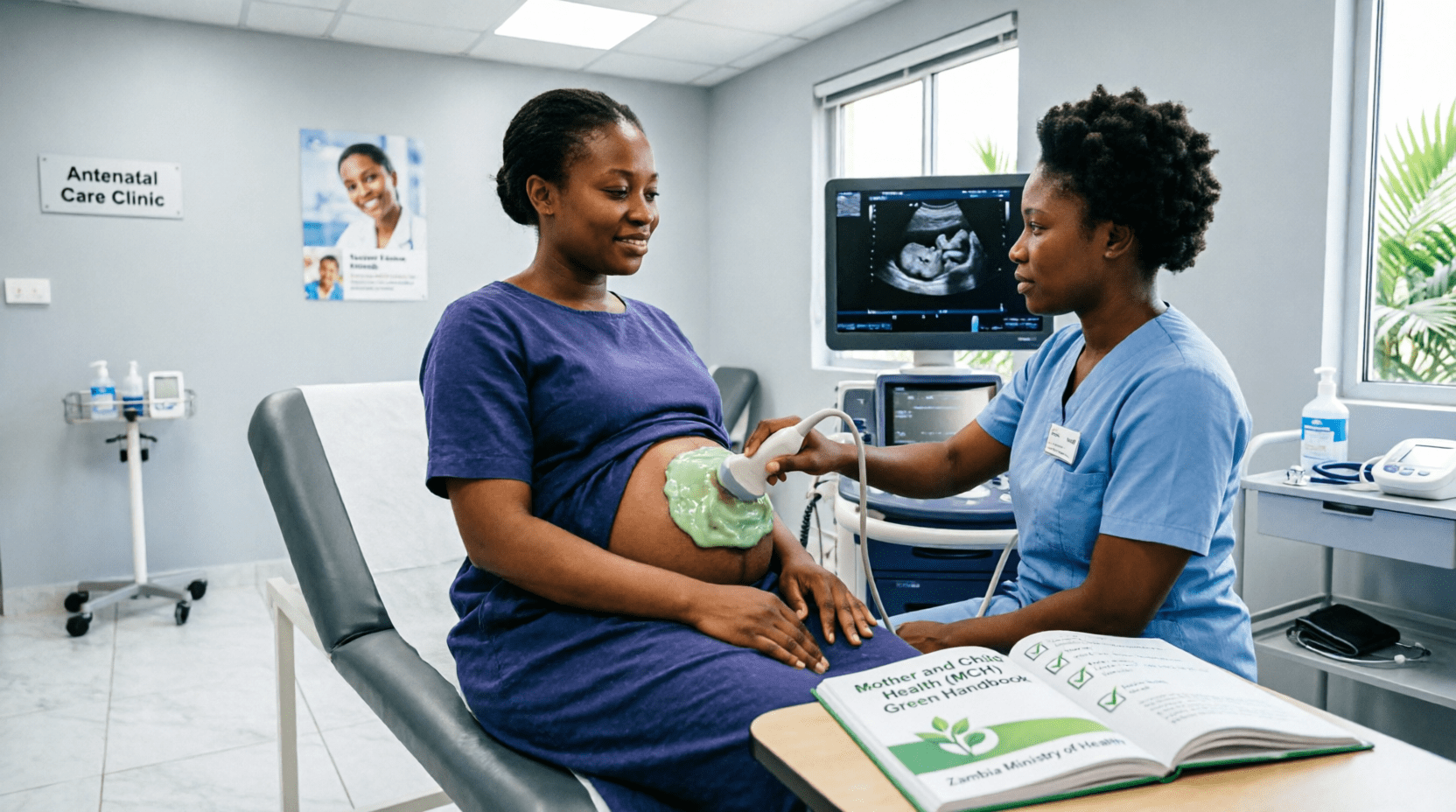
| 2nd Contact | 20 Weeks | Ultrasound scan (to check baby’s growth), monitor blood pressure. |
| 3rd Contact | 26 Weeks | Tetanus Toxoid vaccination, Malaria prevention meds (IPTp). |
| 4th – 8th | 30, 34, 36, 38, 40 Weeks | Monitor fetal movement, prepare birth plan, check for swelling. |
🥗Nutrition: Eating for Two on a Zambian Budget
You don’t need expensive imported supplements to have a healthy pregnancy. Local Zambian foods are packed with the nutrients you need. Aim to eat from these three groups daily:
1. Energy-Giving Foods (Carbohydrates)
- Nshima (Maize meal)
- Sweet potatoes
- Cassava
- Rice and Bread
2. Body-Building Foods (Proteins)
- Beans & Groundnuts: Affordable and rich in protein.
- Kapenta & Ifinkubala: Dried fish and caterpillars are excellent sources of iron and protein.
- Eggs & Chicken: Great for fetal brain development.
3. Protective Foods (Vitamins & Minerals)
- Dark Green Leafy Vegetables: Bonongwe (Amaranth), pumpkin leaves, and cabbage are high in Folic Acid, which prevents birth defects.
- Fruits: Mangoes, bananas, papayas, and oranges boost your immunity.
🦟Preventing Malaria and HIV (PMTCT)
Pregnancy lowers your immune system, making you more vulnerable to infections.
Malaria Prevention
Malaria in pregnancy can cause miscarriage, low birth weight, or stillbirth.
- Sleep under an ITN: Insecticide-Treated Nets are provided for free at ANC clinics. Use them every night.
- Take IPTp: Intermittent Preventive Treatment for malaria is given as pills at your ANC visits.
PMTCT (Prevention of Mother-to-Child Transmission)
All pregnant women are offered HIV testing at their first ANC visit.
- If you test positive: You will be started on Antiretroviral Therapy (ART) immediately.
- The Good News: With proper medication, the risk of passing HIV to your baby is reduced to less than 1%. You can have a healthy, HIV-negative baby!
🚨Danger Signs: When to Rush to the Hospital
Most pregnancies are smooth, but complications can happen suddenly. Do not wait for your next appointment if you experience any of these Danger Signs:
- Vaginal Bleeding: Any amount of bleeding at any stage.
- Severe Headache: Especially if accompanied by blurred vision or dizziness (Signs of High Blood Pressure/Preeclampsia).
- Swelling: Sudden swelling of the face, hands, or feet.
- Convulsions: Fits or epilepsy-like symptoms.
- High Fever: Chills and high temperature (could be Malaria or infection).
- Reduced Fetal Movement: If the baby stops moving or moves much less than usual.
- Water Breaking: Leaking fluid before labor starts.
👶Preparing for Delivery: The Birth Plan
A birth plan is a simple checklist you create with your midwife during your last few ANC visits. It ensures you are ready when labor starts.
Your Birth Plan Should Include:
- Where: Which health facility will you deliver at? (Choose one you visited during ANC).
- Transport: How will you get there at night or in the rain? Have a backup plan.
- Support Person: Who will accompany you? (Partners are encouraged to attend!).
- Supplies: Pack your bag early. Include:
- Maternity pads
- Baby clothes and blankets
- Soap and basin
- Your Green Book and NRC
- Home Care: Who will look after your other children while you are at the hospital?
❓Frequently Asked Questions
Can my husband/partner come to ANC with me?
Yes! Partners are strongly encouraged to attend. It helps them understand your needs, supports HIV counseling as a couple, and prepares them for fatherhood.
Do I need an ultrasound scan?
While not mandatory for every pregnancy, an ultrasound around 20 weeks is highly recommended to check the baby’s position, growth, and heartbeat. Many government hospitals offer this for free or at a subsidized rate.
What if I miss my ANC appointment?
Don’t panic. Just go to the clinic as soon as you can. The midwives will catch you up on any missed tests or vaccinations.
Is home birth safe?
Delivering at a health facility with a skilled midwife or doctor is the safest option. They can handle emergencies like hemorrhage or obstructed labor instantly. Home births carry higher risks for both mother and baby.
Do I have to pay for maternity services at government clinics?
No. The Ministry of Health has exempted pregnant women and children under five from paying user fees at all public health facilities. You only pay if you choose to go to a private clinic.
What should I bring to my first ANC visit?
Bring your National Registration Card (NRC) or passport. If you already have a Mother and Child Health Handbook from a previous pregnancy, bring that too. If it’s your first time, the clinic will issue you a new one.