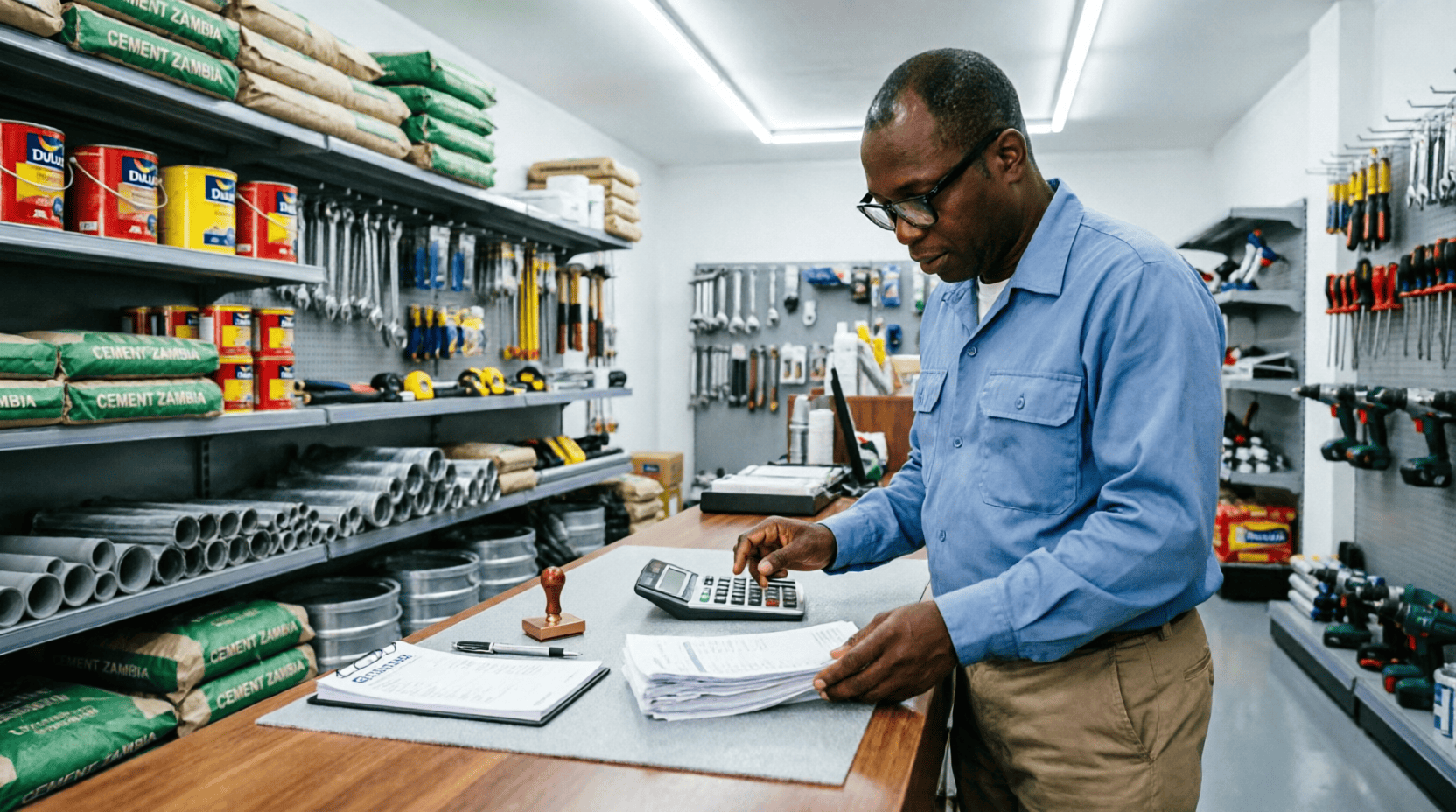
Hardware shop profit Calculator
Calculate your hardware shop’s monthly net profit, estimate product category margins, and determine your break-even sales target. This tool is designed for Zambian hardware store owners to track profitability in Zambian Kwacha (ZMW).
Enter your average monthly sales and expenses to find your true take-home profit.
| Total Monthly Sales (ZMW) | Avg. Cost of Goods Sold (%) | Shop Rent (ZMW/Mo) |
| Staff Salaries (ZMW/Mo) | Transport & Logistics (ZMW/Mo) | Utilities, Security & Misc (ZMW/Mo) |
Hardware margins vary widely. High-volume items (cement) have low margins, while specialized items (tools, paint) have higher margins.
| Product Category | Typical Markup | Gross Margin % | Strategy |
|---|---|---|---|
| Cement & Steel (Rebar) | 5% – 10% | 4.7% – 9.0% | High volume, low margin. Draws customers in. |
| Paint & Accessories | 25% – 40% | 20.0% – 28.5% | Medium volume, good margin. Upsell brushes/rollers. |
| Plumbing & Electrical | 30% – 50% | 23.0% – 33.3% | Lower volume, high margin. Requires technical knowledge. |
| Fasteners (Nails, Screws, Bolts) | 40% – 60% | 28.5% – 37.5% | High margin, impulse buys. Sell by weight or piece. |
| Hand Tools & Safety Gear | 35% – 50% | 25.9% – 33.3% | Steady demand from contractors and DIYers. |
Calculate how much you need to sell each month just to cover your costs (ZMW 0 net profit).
| Total Fixed Monthly Expenses (ZMW) | Average Gross Margin (%) |
Understanding Hardware Shop Profitability in Zambia
Running a hardware store in Zambia can be highly profitable due to the continuous demand for construction and maintenance materials. However, it is a capital-intensive business with tight margins on bulk items. Success depends on inventory turnover, preventing theft/shrinkage, and strategic pricing.
1. Major Cost Drivers in a Zambian Hardware Shop
- Cost of Goods Sold (COGS): Typically 70% – 80% of your sales price. Buying directly from major distributors (e.g., Build It, Cashbuild, or local manufacturers like Lafarge/National Cement) improves margins.
- Transport & Logistics: Fetching stock from depots or delivering to customers eats into profits. Factor fuel and vehicle maintenance into your pricing.
- Shrinkage (Theft & Damage): Hardware shops are prime targets for internal and external theft (especially small items like nails, taps, and electrical fittings). Budget 2-3% of sales for shrinkage.
- Dead Stock: Money tied up in slow-moving items (e.g., obscure pipe fittings) is money you can’t use to buy fast-moving cement and steel.
2. Strategies to Maximize Hardware Store Profits
- The “Bait and Upsell” Strategy: Price cement and rebar competitively (low margin) to attract builders. Make your real profit on the high-margin items they buy alongside it: wheelbarrows, shovels, paint, nails, and plumbing fittings.
- Offer Delivery Services: Charge a delivery fee for bulk orders. This covers your transport costs and can even generate a small additional profit margin.
- Build Relationships with Fundis (Contractors): Offer loyal contractors a small discount or credit terms. A contractor who builds 3 houses a year will bring you more consistent revenue than 50 one-time DIY customers.
- Strict Inventory Control: Use a simple POS system or ledger to track stock daily. Reconcile high-value items (paint, electrical cables) weekly to catch theft early.
- Diversify into Services: Offer key cutting, paint mixing/tinting, or tool rental. These services have near 100% gross margins after the initial equipment cost.
Frequently Asked Questions (FAQs)
What is the average profit margin for a hardware shop in Zambia?
The gross profit margin typically ranges from 20% to 30% depending on the product mix. The net profit margin (after rent, salaries, and transport) is usually between 8% and 15% for well-managed shops.
How much capital do I need to start a hardware shop in Lusaka or Ndola?
A small to medium hardware shop requires between ZMW 100,000 and ZMW 300,000 in startup capital. This covers shop deposit, initial inventory (cement, steel, paint, basic tools), shelving, and operating cash for the first 3 months.
Which hardware items make the most profit?
While cement brings in the most revenue, the highest profit margins come from small consumables: nails, screws, plumbing fittings (elbows, taps), electrical switches, and paint accessories. A ZMW 5 bag of nails might cost you ZMW 2 but sell for ZMW 5 (60% margin).
How do I prevent theft in my hardware shop?
Keep high-value, small items (electrical cables, premium taps, measuring tapes) behind the counter. Install CCTV cameras. Conduct random stock counts weekly, and foster a good relationship with your staff by paying fair wages to reduce internal theft.
Disclaimer: This calculator provides estimates for planning purposes only. Actual profitability varies based on location, supplier negotiations, management efficiency, and market competition. Always consult with a business advisor or accountant for precise financial planning.